Scissor Lift vs. Boom Lift: Which One Does Your Project Actually Need?
This is the single most common equipment question we get from first-time renters, and it's rarely answered well: "should I book a scissor lift or a boom lift?" The honest answer is that it depends less on height and more on the shape of the access problem you're actually solving. Here's how to decide in under five minutes.
What's the Core Difference?
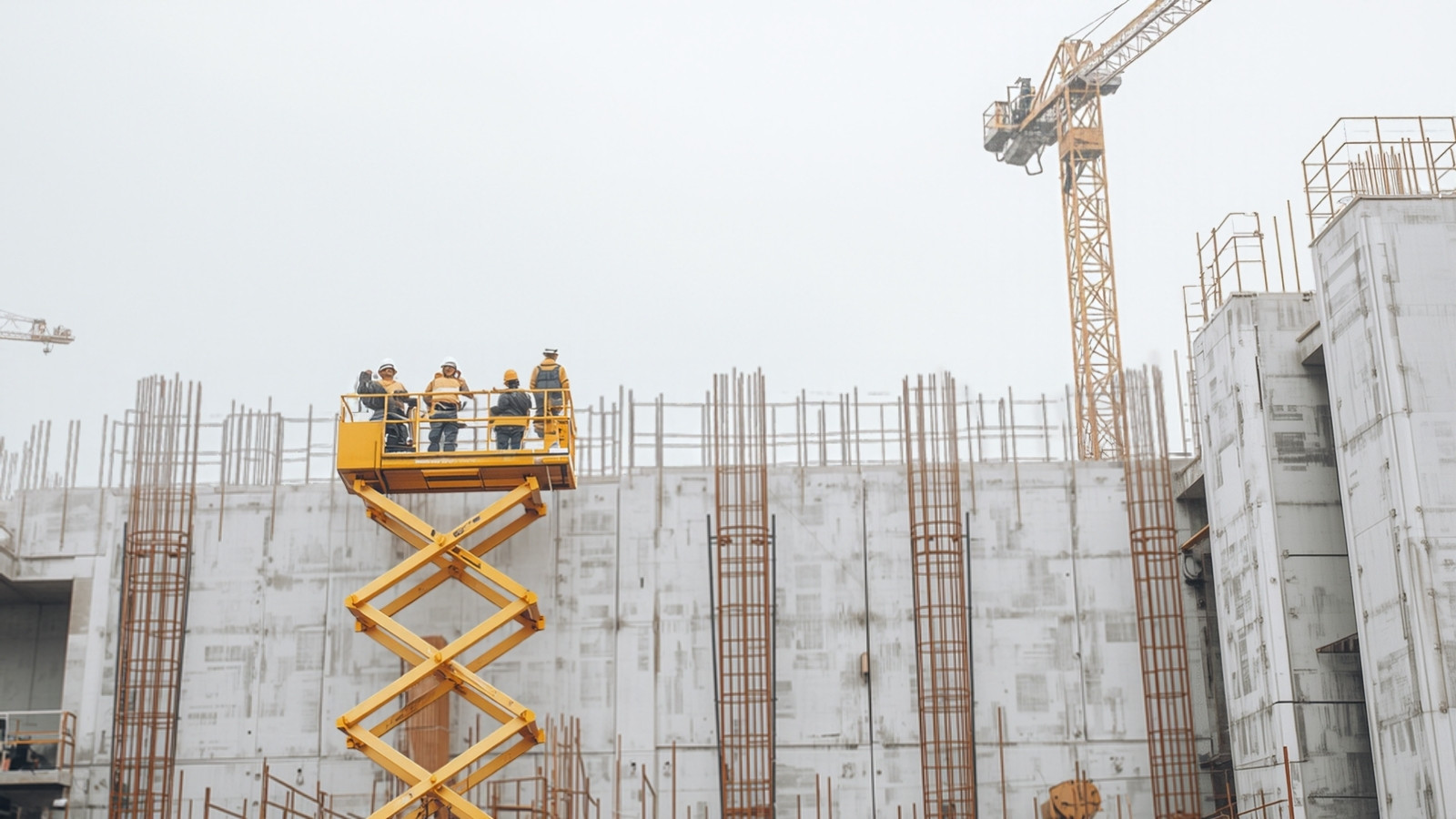
A scissor lift moves a large, stable platform straight up and down using a crossed, folding support structure. Think of it as a powered, elevating work floor. A boom lift moves a smaller platform on the end of an arm that can extend horizontally as well as vertically.
That one distinction, a platform that only goes up versus a platform that goes up and out, is what decides almost every real-world choice between them.
Platform Capacity & Multi-Worker Access
Scissor lifts typically offer a larger platform than boom lifts of comparable height, which means more room for multiple workers, tools, and materials at the same time. If your task involves a two- or three-person crew working together with equipment, such as running cable trays, installing ductwork, or finishing ceilings, a scissor lift's platform space is usually the more practical and efficient choice.
Boom lift platforms are smaller, built for one or two workers and hand tools, because the priority is reach, not floor space.
Reach: Vertical-Only vs. Vertical-and-Horizontal
This is the decision point that matters most. A scissor lift's platform sits directly above its base: move the base, and you move where the platform is, but you can't reach sideways from a fixed position. A boom lift's platform can extend out and over obstacles from a single parked position.
If your work point is directly reachable by positioning the machine underneath or beside it, a scissor lift gets you there more cheaply and stably. If the work point is behind, above, or beyond an obstacle, such as a parapet, an existing structure, a water feature, or landscaping, you need a boom lift's horizontal reach instead.
Best For: Indoor, Flat-Surface Work
Scissor lifts are the default choice for warehouse, factory, and commercial interior work: flat concrete floors, predictable ceiling heights, and a need for a stable, spacious platform. Electric scissor lifts are also the practical choice for indoor use where emissions and noise matter.
Best For: Outdoor, Uneven-Terrain Work
Rough-terrain scissor lifts exist and handle moderately uneven ground, but once a site has real slopes, obstacles, or the work point sits above or beyond a structure, a boom lift (particularly an articulating model) becomes the only practical option. Outdoor facade work, structural steel, and anything requiring reach over an obstacle belongs to boom lifts, not scissor lifts.
Decision Checklist: 5 Questions to Ask
- Does the work point sit directly above/beside where the machine can park, or beyond an obstacle? Direct access → scissor lift. Obstructed access → boom lift.
- Do you need multiple workers and materials on the platform at once? Scissor lifts generally offer more usable platform space.
- Is the surface flat and stable, or sloped/uneven? Flat and stable favours scissor lifts; uneven terrain favours rough-terrain boom or spider lift models.
- Is this an indoor job with emissions or noise restrictions? Electric scissor lifts are the standard indoor answer.
- Does the task need height and significant horizontal reach from one position? That combination almost always means a boom lift.
If you're still unsure after running through these, the fastest path is to describe the actual task, not the equipment you think you need, to your rental partner, and let them confirm the category before you book.
FAQs
Can a scissor lift reach sideways at all? Only minimally. Scissor lifts are designed for vertical travel directly above their base, not horizontal reach.
Is a boom lift safer than a scissor lift? Neither is inherently safer; both are safe when operated by trained personnel within their rated load and reach limits. The safety question is about matching the right machine to the task, not one category being universally safer than the other.
Which is cheaper to rent, a scissor lift or a boom lift? Scissor lifts are generally less expensive at comparable heights because of their simpler mechanism, but cost should follow the right equipment choice for the task, not the reverse.
Can I use a boom lift indoors? Yes, electric boom lift models are used indoors, though ceiling height, door widths, and floor load capacity need to be confirmed first. See our boom lift rental guide for the full picture on categories and specs.