Pick & Carry Crane vs. Crawler Crane: Choosing the Right Lifting Solution
Once a project needs a crane, the next question is which kind. Pick & carry and crawler cranes solve overlapping problems in very different ways, and picking the wrong one usually shows up as wasted mobilization time, a stalled lift sequence, or a machine that simply can't get to where it needs to work. Here's how to tell them apart and choose correctly.
What Is a Pick & Carry Crane?
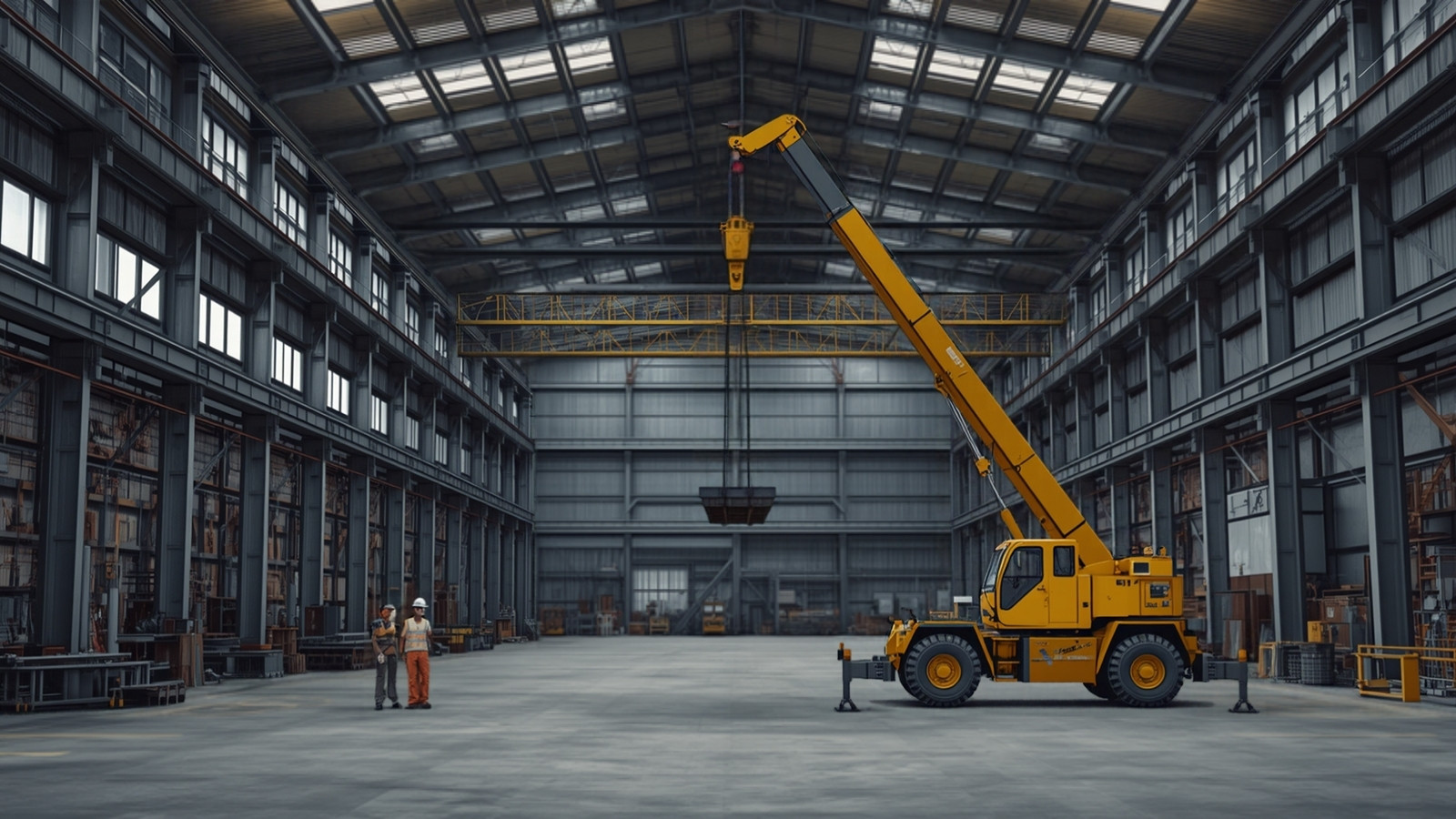
A pick & carry crane is a wheeled mobile crane built around one defining capability: it can lift a load and physically drive to a new location while still carrying it, without setting the load down first. No outrigger deployment, no re-rigging, no repositioning sequence between lifts. CE Infrastructure LLP operates pick & carry cranes in the 14-to-25-ton capacity range, which covers most short-radius, fast-turnaround lifting work on active industrial and construction sites.
Their compact chassis and tight turning radius also make them genuinely useful in congested yards and factory floors where a larger crane simply can't maneuver.
What Is a Crawler Crane?
A crawler crane runs on tracks instead of wheels, trading road speed and mobility for substantially greater lifting capacity and stability, particularly on soft, uneven, or unprepared ground. Crawler cranes are the standard choice for heavy structural lifts: bridge and metro pier erection, large industrial equipment installation, and any job where the load, height, or radius exceeds what a pick & carry crane can safely handle.
Because they don't drive on public roads under their own power, crawler cranes typically arrive partially disassembled and get rebuilt on site, which adds mobilization time and cost that a pick & carry crane doesn't carry.
Capacity & Ground Conditions Compared
The real decision rarely comes down to tonnage alone. Ground conditions and task repetition matter just as much:
- Ground stability: pick & carry cranes need reasonably firm, prepared surfaces; crawler cranes handle soft or uneven ground far more confidently thanks to their broad track footprint distributing weight.
- Mobility between lifts: if a job involves many short lifts across a site, a pick & carry crane's ability to drive with a suspended load saves enormous time versus repeatedly setting up and breaking down a crawler crane.
- Maximum capacity: crawler cranes scale up to much higher tonnage than pick & carry cranes, making them the only realistic option once a lift exceeds light-to-medium industrial loads.
- Site access: a pick & carry crane's smaller footprint and road mobility suit congested or space-constrained sites; a crawler crane needs more room to assemble and operate.
Which Is Right for Metro Rail, Industrial, or Ship Repair Work?
- Metro rail and bridge pier work almost always calls for crawler crane capacity, given the weight of precast girders and segments and the structural precision required. See our pier girder erection guide for the full process.
- Industrial facility work, such as repositioning machinery inside an active plant, is a textbook pick & carry use case: fast setup, tight maneuvering, and lift-and-carry capability in one machine.
- Ship repair and marine support work varies by task, lighter deck and fitting work often suits a pick & carry crane, while major hull or structural lifts typically need crawler crane capacity staged on a barge or quay.
The right answer depends on the specific load, radius, and ground conditions of your project, not a blanket preference for one crane type over the other. For a broader look at crane categories and cost drivers, see our crane rental guide.
FAQs
Can a pick & carry crane replace a crawler crane? Only for lighter loads within its capacity range. Beyond roughly 25 tons, or on soft/uneven ground, a crawler crane becomes the safer and often only viable option.
Why do crawler cranes take longer to mobilize? They typically travel to site partially disassembled and require on-site assembly, unlike pick & carry cranes, which can be driven directly to the work point.
Is a pick & carry crane cheaper to rent than a crawler crane? Generally yes for comparable-duration work, largely because of lower mobilization cost and faster setup, but the right comparison is total project cost for the specific lift, not a flat rate comparison.
Which crane is better for congested sites? Pick & carry cranes, thanks to their compact footprint, tight turning radius, and ability to relocate without setting the load down.