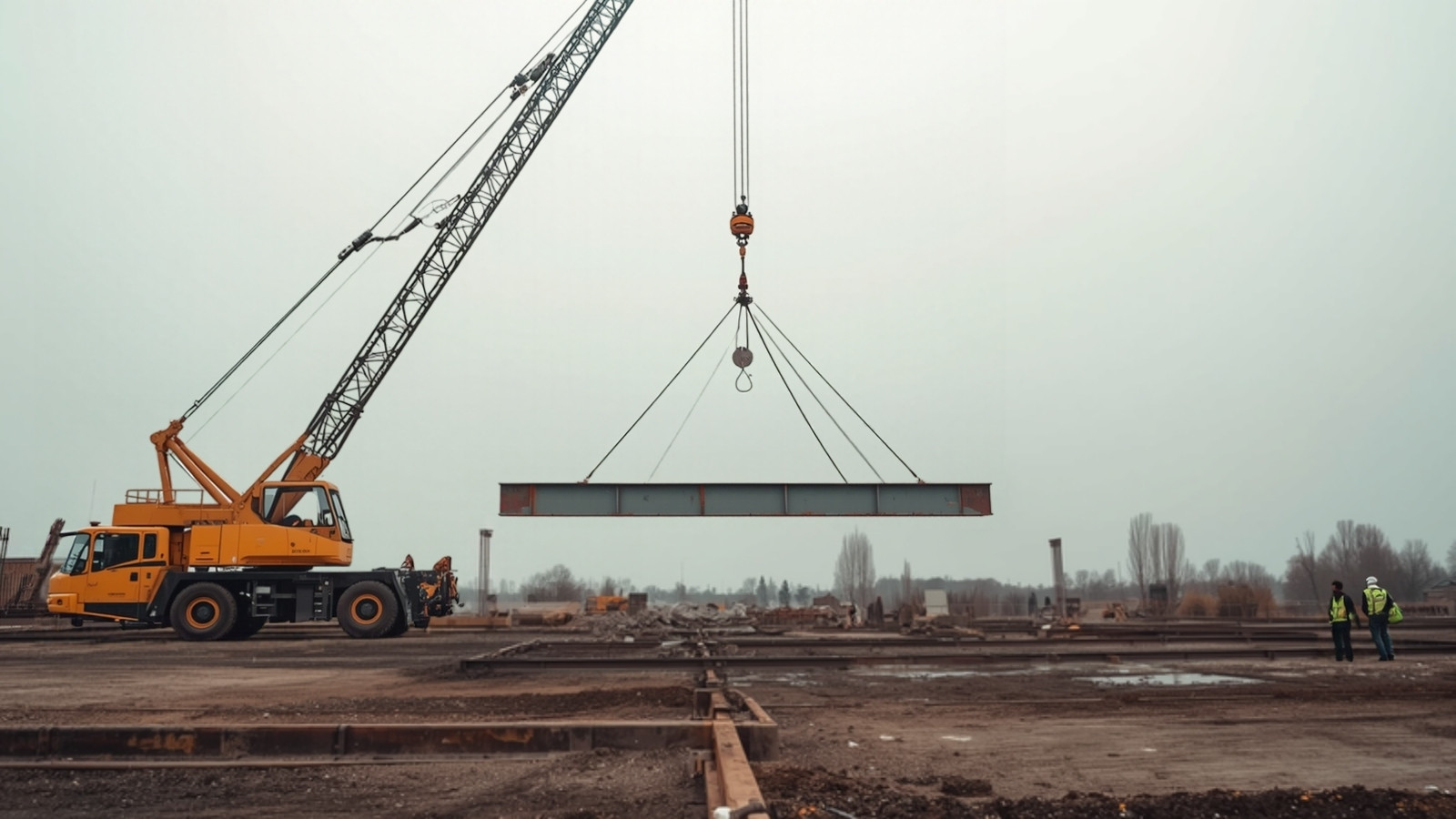
Crane Rental in India: Types, Capacities, and What Actually Drives Cost
Crane rental is the single most competitive, most searched equipment category in Indian infrastructure, and also the one where a bare "price per day" headline is least useful. Capacity, ground conditions, lift radius, and project type all interact to determine what crane is actually right for a job, long before cost enters the conversation. This guide walks through that selection logic the way we actually have the conversation with clients.
Types of Cranes Used in Indian Infrastructure Projects
Three broad crane categories cover the overwhelming majority of Indian infrastructure and industrial lifting work:
- Pick & carry cranes: compact, highly maneuverable mobile cranes that can lift a load and drive with it still suspended, making them ideal for short-radius, fast-turnaround lifts on active sites.
- Crawler cranes: track-mounted cranes built for heavy capacity and stability on soft or uneven ground, commonly used for large structural lifts, bridge and metro pier work, and heavy industrial erection.
- Mobile/truck-mounted cranes: road-going cranes that combine transport and lifting capability, suited to projects requiring frequent relocation between sites or within a large site.
CE Infrastructure LLP operates pick & carry cranes in the 14-to-25-ton range alongside crawler crane capability, giving us flexibility across light industrial lifts and heavy infrastructure erection within the same fleet.
Pick & Carry Cranes: Capacity & Use Cases
Pick & carry cranes are purpose-built for a specific advantage: unlike most mobile cranes, they can lift a load and relocate while still carrying it, without needing to set down, reposition outriggers, and re-rig. Our fleet's 14-to-25-ton capacity range covers:
- Machinery installation and repositioning inside active industrial facilities
- Material handling on congested construction sites where a larger crane can't maneuver
- Short-duration, short-radius lifts where setup speed matters more than maximum reach
- Loading and unloading at sites without dedicated material-handling infrastructure
Their compact footprint and fast setup make them the default choice whenever a site has tight access or the lift sequence requires repeated repositioning, something a crawler crane, by design, isn't built to do efficiently.
For a detailed comparison of when to choose a pick & carry crane over a crawler crane, see our dedicated comparison guide.
What Determines Crane Rental Cost
As with aerial work platforms, we won't publish a bare "starting from ₹X" figure: it would misrepresent a genuinely variable cost structure. The real determinants are:
- Lift capacity and radius required: the manufacturer's load chart, not a single "tonnage" number, determines what a crane can actually lift at your specific boom length and angle.
- Rental duration: day, weekly, and monthly rates scale differently, and short-notice single-day bookings typically cost more per day than planned multi-week engagements.
- Mobilization distance and site access: getting a crawler crane to a remote project site, potentially requiring partial disassembly and permits for oversized transport, is a real and sometimes significant cost component.
- Operator and rigging crew: certified crane operators and signal/rigging personnel are either included or billed separately depending on the rental structure; confirm this explicitly before comparing quotes.
- Ground preparation requirements: crawler cranes need stable, load-bearing ground or matting; site preparation costs are sometimes the client's responsibility and sometimes bundled into the rental.
- Standby and contingency terms: what happens, and what it costs, if the lift sequence is delayed by factors outside the crane operator's control.
Any quote that doesn't ask about lift radius, duration, site access, and ground conditions before quoting a number should be treated as a placeholder, not a real estimate.
Choosing Crane Capacity for Your Project
A common and costly mistake is specifying crane capacity based on the heaviest single component being lifted, without accounting for lift radius. A crane's rated capacity drops as boom length and lift radius increase: the further out and higher up the load needs to travel, the less that same crane can safely lift. The right way to specify capacity is:
- Identify the heaviest individual lift in the sequence
- Confirm the exact lift radius (horizontal distance from the crane's centre to the load's final position)
- Cross-reference against the specific crane model's load chart at that radius, not its maximum rated capacity
- Add a safety margin rather than specifying to the exact calculated limit
This is a conversation worth having directly with your rental partner's engineering team before committing to a specific crane class, especially on structural or infrastructure lifts where a miscalculation isn't just costly, it's dangerous.
Safety Standards & Operator Certification
Crane operation in India sits under a combination of factory/site safety regulations and manufacturer/industry certification standards. At minimum, confirm:
- The operator's certification is current and matches the specific crane category being supplied
- A dedicated signal person/rigger is part of the crew for any complex or restricted-visibility lift
- The crane itself has current inspection and maintenance documentation
- Ground-bearing capacity has been assessed and matches the crane's outrigger or track loading requirements
CE Infrastructure LLP's safety standard includes CE-certified equipment, trained operating crews, and a 97% fleet uptime record built on preventive maintenance and backup equipment availability, the same standard that has supported zero major incidents across 500+ projects.
How to Get an Accurate Crane Rental Quote
To get a quote that reflects your actual project, come prepared with:
- The heaviest single lift weight and its required radius/height
- Site access details (road width, ground conditions, overhead obstructions)
- Required rental duration and expected start date
- Whether you need an operator and rigging crew included
- Site location, for an accurate mobilization estimate
The more of this you can provide upfront, the more useful and comparable the quotes you receive will be.
FAQs
What's the difference between a pick & carry crane and a crawler crane? A pick & carry crane can lift and move a load simultaneously on wheels, suited to fast, short-radius lifts; a crawler crane runs on tracks, offers greater capacity and stability, and is built for heavier, longer-duration structural lifts. See our full comparison.
How is crane rental cost calculated in India? It's driven by capacity/radius requirement, rental duration, mobilization distance, operator inclusion, ground preparation needs, and standby terms, not a single flat day rate.
Do I need a licensed operator to rent a crane? Yes, in effectively all practical and safety-compliant scenarios, crane operation is specialized, certified work, and a reputable rental partner will supply or require a certified operator as standard.
What crane is used for bridge or pier girder erection? This depends on the specific girder weight, span, and site access, but crawler cranes and specialized lifting frames are typically used for pier girder erection. See our dedicated guide to the pier girder erection process for the full equipment and process breakdown.