How Does a Scissor Lift Work? The Mechanics Explained
Most people who rent a scissor lift never ask how it actually works. They just need a stable platform at height. But understanding the mechanism behind the machine makes it much easier to judge whether a given unit is right for your site, your floor, and your task. Here's the plain-language version.
What Is a Scissor Lift?
A scissor lift is a type of aerial work platform that raises a flat, stable platform straight up using a folding, criss-crossed support structure beneath it. Unlike a boom lift, it doesn't extend horizontally. It only moves vertically, directly above its base. That simplicity is exactly why it's the standard choice for indoor maintenance, installation, and finishing work where a stable, roomy platform matters more than reach.
The Pantograph Mechanism: How the Platform Rises
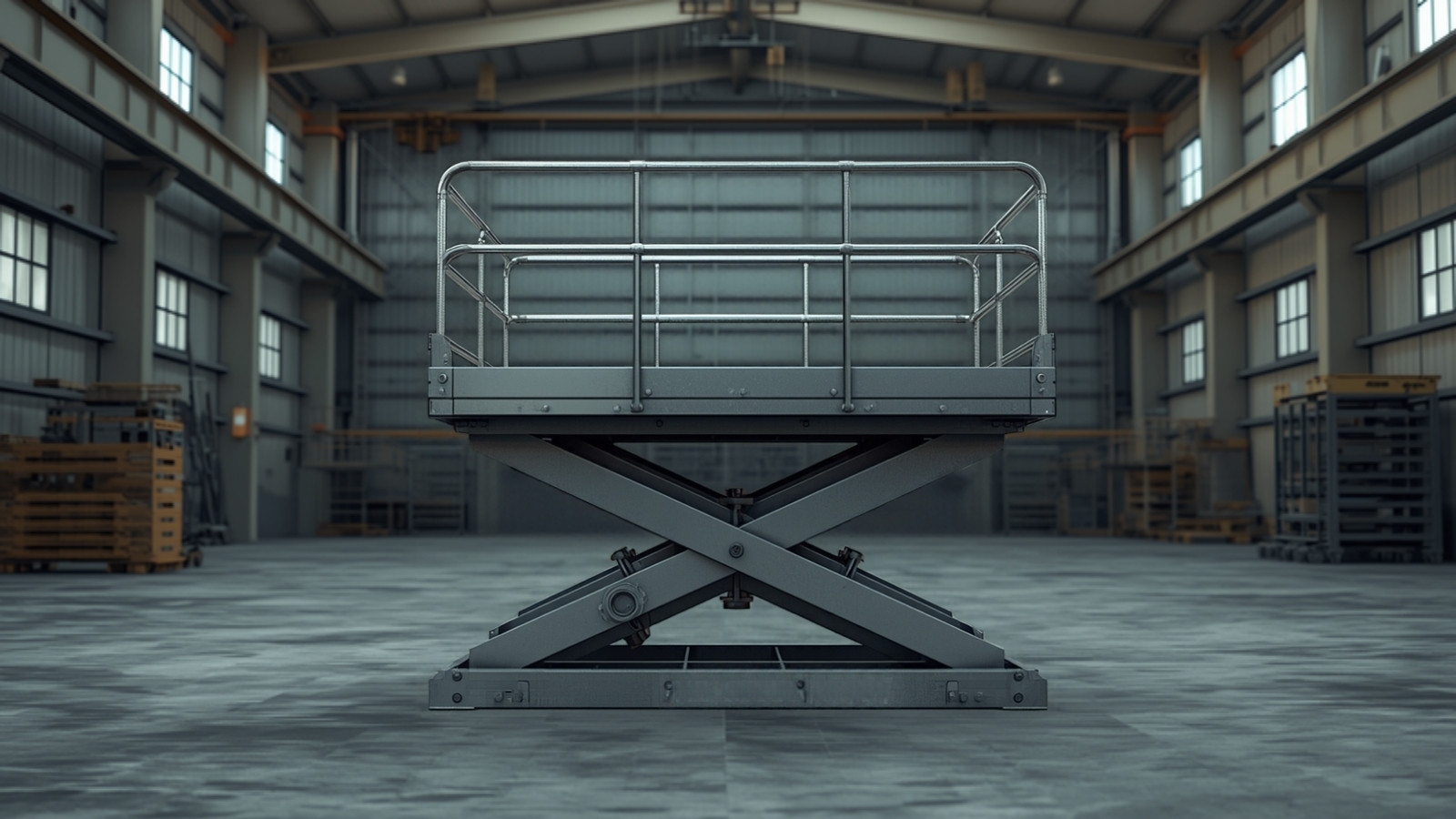
The defining feature of a scissor lift is its pantograph mechanism: a series of crossed, hinged supports (literally shaped like an "X" when viewed from the side) stacked in multiple linked sets. As a hydraulic cylinder (or, on some models, an electric or pneumatic actuator) extends, it pushes the base of each "X" outward. Because each support is pinned at the crossing point, pushing the base out forces the top of the structure up, and because the sets are stacked, that upward motion multiplies through each layer.
This is a mechanically efficient way to achieve significant height from a compact folded footprint, and it's why a scissor lift can collapse down small enough to pass through a standard doorway while still extending several metres up. The platform always stays level and directly above the base throughout the lift, which is what gives scissor lifts their stability advantage over other access equipment at comparable heights.
Indoor Electric vs. Rough Terrain: Two Different Machines
Not all scissor lifts are built for the same ground.
Indoor electric models run on battery power, produce no emissions, and are built for smooth, flat, load-rated floors such as warehouses, retail interiors, and factory floors. Their narrower wheelbase and lower weight make them practical for use on finished flooring without damage.
Rough-terrain models run on diesel or dual-fuel power, use larger, often four-wheel-drive chassis, and are built to handle uneven, unpaved, or outdoor ground, including construction sites before flooring is laid, yards, and outdoor maintenance work. They're heavier and less maneuverable indoors but far more capable outdoors.
Choosing the wrong type for the ground conditions is one of the most common, and most avoidable, scissor lift rental mistakes.
Height Range Explained (8m–24m)
Our scissor lift fleet covers platform heights from roughly 6m up to 18m in standard configuration, extending further in specialized units, which comfortably spans the two most common use cases:
- Lower range (up to ~10m): ceiling work, signage, mezzanine-level installation, retail and interior fit-out
- Upper range (10m–18m+): warehouse racking installation, industrial facility maintenance, higher ceiling commercial interiors
As with boom lifts, always confirm platform capacity at your required height, not just the maximum height figure. Load limits typically decrease as the platform extends to its upper range.
Surface and Ground Requirements
Because the pantograph mechanism keeps the platform directly above the base, scissor lifts are more sensitive to ground stability than boom lifts with outriggers. Before booking, confirm:
- Floor load rating (critical for raised or mezzanine floors, and for upper storeys of buildings under construction)
- Surface levelness: most units have a maximum permissible tilt angle before the lift mechanism locks out as a safety measure
- Clear overhead path: scissor lifts travel straight up, so overhead obstructions directly above the work point matter more than they would for a boom lift that can maneuver around them
CE Certification (EN 280) and What It Covers
Scissor lifts sold and operated in CE-marked configuration comply with EN 280, the European standard specifically covering mobile elevating work platforms. This certification addresses structural integrity, stability calculations, and safety-device requirements for the machine itself. It does not certify the operator. We explain the distinction between machine certification and operator certification in full in our CE certification guide.
When a Scissor Lift Is the Wrong Choice
A scissor lift is the wrong tool whenever the work point isn't directly above or beside where the machine can be positioned, such as behind a parapet, over an obstruction, or requiring genuine horizontal reach. In those cases, a boom lift's articulating or telescopic arm is the right category instead; see our full scissor lift vs. boom lift comparison for a scenario-by-scenario decision guide.
FAQs
Why is it called a "scissor" lift? The name comes from the crossed, X-shaped support pattern of the pantograph mechanism, which visually resembles an open pair of scissors stacked in multiple layers.
Can a scissor lift tip over? Scissor lifts are designed with stability safeguards including tilt sensors that prevent operation beyond a safe ground-level angle, but they still require level, load-rated ground within the manufacturer's specification.
What powers a scissor lift, hydraulics or electricity? Both exist: hydraulic cylinders typically provide the lifting force, while the cylinder itself may be driven by an electric pump (indoor models) or a diesel engine (rough-terrain models).
How high can a scissor lift go? Within our fleet, platform heights run up to roughly 18 metres in standard configuration. Always confirm the specific unit's rated height and capacity against your project's requirement.